
The Green Revolution in Golf Bags: 2026 Sustainable Golf Bag Buying Guide
Golf is deeply connected to nature, yet the equipment we carry onto the course has long carried a hidden environmental footprint. If you are shopping for a new golf bag and want an eco-friendly option, you may feel confused by vague green marketing terms. In this buying guide, we walk you through core considerations for sustainable golf bags, key industry eco trends, practical checklists to evaluate eco claims, and introduce our GRS-certified lightweight golf stand bag as a verified sustainable option for your next purchase.
 Why Pick a Sustainable Golf Bag When Shopping
When we talk about golf sustainability, most conversations focus on course water usage or biodegradable golf balls. Golf bags are frequently overlooked, but they are one of the longest-lasting, most frequently used pieces of golf gear.
First, raw material production creates heavy pollution. Conventional golf bag fabrics use brand-new petroleum-based plastic fibers. These fibers do not break down naturally. When old golf bags are thrown away, they can sit in landfills for hundreds of years.
Second, packaging waste is widespread. Many new golf bags arrive wrapped in thick plastic film, plastic zip ties, and disposable foam inserts that get tossed immediately after unboxing. This single-use plastic waste piles up across the golf supply chain.
Third, manufacturing carbon emissions add up. Cutting, stitching, dyeing and finishing synthetic fabrics consume large amounts of energy. The more virgin material a golf bag uses, the higher its overall carbon footprint from factory to your garage.
For shoppers, choosing a responsible sustainable golf bag is a simple, practical way to reduce the environmental impact of your golf hobby without sacrificing performance.
Key Sustainable Trends to Know Before You Buy
Sustainability remains one of the core trends in the global golf industry in 2026. The European Tour has released its official 2026–2030 sustainable development strategy, pushing manufacturers and tournaments to cut waste and carbon output. On the course side, golf courses across the United States have successfully reduced water consumption by 31% compared to levels in 2005, setting a green example for the whole ecosystem.For golf bag makers, three clear trends shape what you will see while shopping.
The first trend is recycled input materials. More brands are replacing virgin polyester with RPET, fabric made from recycled plastic bottles. It delivers the same durability, water resistance and lightweight performance golfers need, without drawing on new fossil fuel resources. Many qualified sustainable models contain at least 50% recycled content verified by third-party audits.
The second trend is transparent third-party certification. Green marketing words like “eco-friendly” can be misleading, so reputable manufacturers are adopting globally recognized standards such as GRS, the Global Recycled Standard, to prove recycled content claims. Products that pass GRS checks also often qualify for Amazon’s Climate Pledge Friendly badge.
The third trend is zero-waste packaging. Progressive brands are phasing out plastic wrapping and switching to recycled paper boxes, paper tape, and compostable fillers.
This shift also attracts younger golf shoppers. A fast-growing segment of new players prioritizes brands with clear environmental commitments.

Your Step-by-Step Buying Checklist: How to Pick a Real Eco Golf Bag
This is the core buying section of this guide. Not every golf bag labeled “green” is genuinely sustainable. Greenwashing is common in the golf space. Follow this checklist when you compare products:
- Verify third-party certifications first. GRS certification is the gold standard. It audits recycled material percentage, supply chain, chemical rules and labor compliance. Amazon Climate Pledge Friendly Badge is another trusted verification. Avoid products that only say “eco” with no certificate support.
- Check fabric material details. Prioritize RPET fabric made from post-consumer plastic waste. Skip vague descriptions such as “green fabric” with no material breakdown.
- Match the style to your playing habit. Stand bags suit golfers who prefer walking the course; cart bags are better for players who ride carts. A sustainable bag only works for you if its style fits your usual way of playing.
- Test durability and practical features. Look for reinforced stitching, reliable zippers, proper club dividers and waterproof coating. A durable bag that lasts years is more eco-friendly than a cheap fragile option.
- Check brand after-sales and recycling policy. See if the brand supports part replacement or old bag recycling programs.
If a brand cannot provide certification, material proof or clear product specs, treat its eco claims carefully.
KVV Sports’ GRS-Certified Golf Bag For Your Consideration
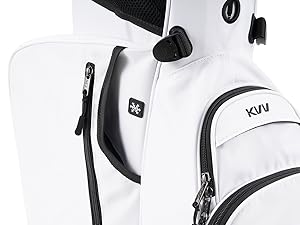
At KVV Sports, sustainability is not a one-off marketing campaign. Our lightweight golf stand bag carries official GRS certification, containing at least 50% post-consumer recycled RPET material. This sustainable golf bag also qualifies for the Amazon Climate Pledge Friendly badge, so shoppers can trust our green claims are independently verified.
We refuse to sacrifice performance for sustainability. This stand bag fits golfers who love walking the course. It has a lightweight build, sturdy auto-adjusting stand legs, 7-way full-length club dividers, waterproof coating and plenty of zippered storage pockets golfers require. You do not need to choose between protecting the golf course and owning a high-functioning, comfortable golf bag.
We keep working to improve. Our roadmap includes expanding recycled component parts and exploring compostable packaging options in future releases of our golf gear lineup.
FAQ
Are recycled RPET golf bags less durable than regular polyester golf bags?
No. Modern RPET recycled fabric can match or even exceed the tear resistance and water resistance of virgin polyester. Our GRS lightweight golf stand bag uses high-grade recycled fabric built for regular rounds on the course.
What does GRS certification actually mean for a golf bag?
Global Recycled Standard (GRS) tracks recycled material content, supply chain transparency, chemical restrictions, and labor standards. It means the recycled content percentage is independently audited, instead of being a self-reported claim.
Can I recycle my old golf bag when it wears out?
It depends on local waste facilities. Mixed fabric golf bags are hard for standard curbside recycling. We recommend checking local textile recycling programs, or looking for brand take-back schemes where available.
Are sustainable golf bags much more expensive than normal golf bags?
They used to carry a large price premium, but that gap has shrunk. At KVV, we price our GRS certified lightweight golf stand bag competitively, so sustainable choices fit most golfers’ budgets.
Is the Amazon Climate Pledge Friendly Badge the same as GRS certification?
No. GRS is a textile certification that validates recycled material content. The Amazon Climate Pledge Friendly Badge is Amazon’s badge for products with reduced carbon footprint. Our lightweight golf stand bag meets both sets of requirements.
Final Thoughts
This buying guide walks you through everything you need when shopping for a sustainable golf bag. Golf is a sport built on nature. Every choice we make as golfers adds up.When you compare golf bags, use our checklist: look for verified recycled material, trusted certification, and features matching your playing style. Do not be tricked by empty eco slogans.
If you are ready to pick a responsible, high-performance eco golf bag, explore our KVV GRS certified lightweight golf stand bag built for everyday play.