
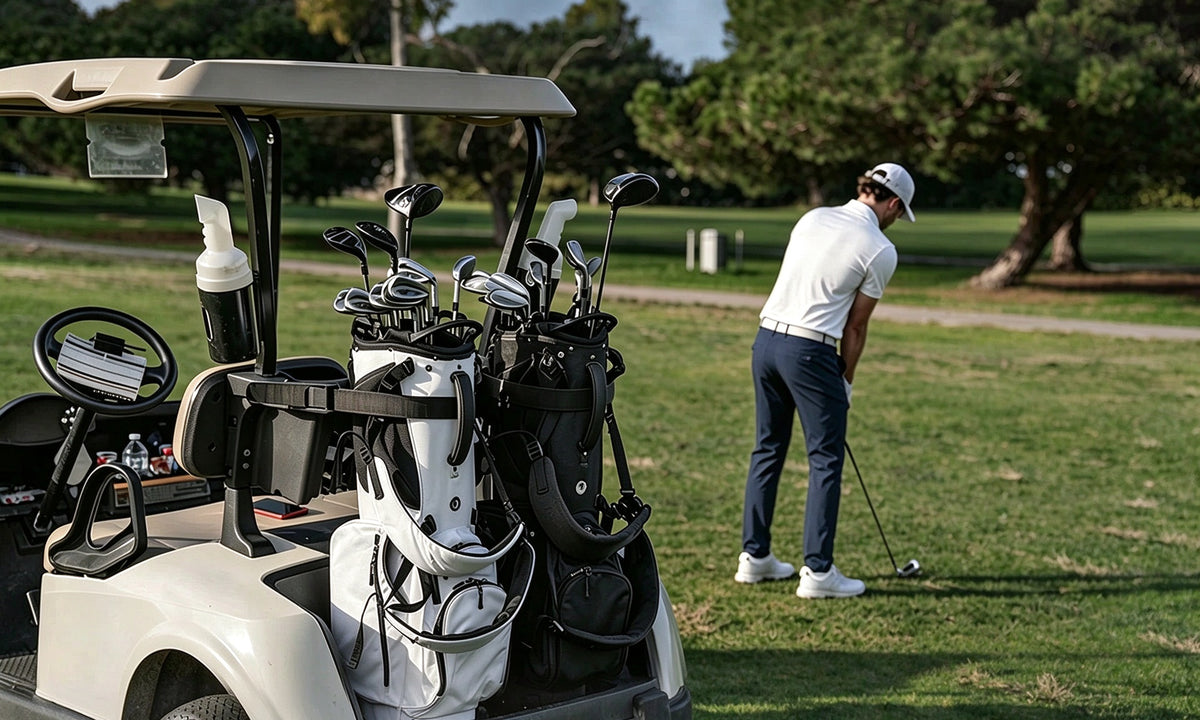
Walking vs Riding a Golf Cart: Health, Performance & Golf Experience
Getting around the golf course is one of the first decisions every golfer makes before teeing off, and it is also one of the most personal. Some players love the ritual of walking from hole to hole, feeling the turf under their feet and using the time between shots to think. Others prefer the ease of a motorized golf cart, covering long distances quickly and saving their legs for the swing. Neither choice is wrong, but each changes the round in real, measurable ways. Understanding what walking and riding each offer can help you decide what fits your body, your schedule, and the way you like to play.
1. The Health Benefits of Walking Golf
 More Daily Movement Than Riding
The most obvious difference between walking and riding is physical activity. Walking a full 18 holes typically adds thousands of steps to your day. The exact number varies with course layout and how much you wander, but it is consistently far more than you would accumulate while riding between shots. Research on daily movement from Mayo Clinic shows that a complete round of golf on foot can make a meaningful contribution to adult physical activity, supporting cardiovascular health, circulation, and general mobility without the high impact of running.
Because the movement is continuous over three to five hours, walking golf functions as steady, moderate-intensity aerobic exercise. Over a full round, many players burn a substantial number of calories simply from moving across fairways and between greens. Hilly courses raise the effort noticeably, while flat, compact layouts keep it gentler. This makes walking golf a flexible form of exercise. You can dial the intensity up or down just by choosing which course you play, which is something a stationary workout rarely offers.
2. Fatigue and Golf Performance
When Fatigue Can Hurt Your Game
Fatigue is the main reason some golfers avoid walking. It is true that walking slowly drains energy over the course of a long round, and tired legs can make it harder to stay balanced and committed through the swing. Some players notice their short game softening on the back nine simply because their lower body is worn out. Riding removes that specific kind of leg fatigue, keeping energy more even from the first tee to the final green. For beginners, players recovering from injury, or anyone who simply does not enjoy extended walking, a cart can be the smarter, more comfortable option.
Fit Players Are Usually Fine
What the research also suggested is that the fatigue from walking rarely hurts full-swing performance in golfers who already have a reasonable fitness baseline. The players most likely to see a drop in quality late in the round are beginners and those with limited stamina, because their bodies run out of gas sooner. If you already exercise regularly, walking 18 holes is usually well within your comfort zone. If you are new to the sport or out of practice, it is wise to build up gradually and listen to your body before committing to a full walking round in extreme heat or over difficult terrain.
3. Pace of Play and Course Rules
 Pace of play is another factor that shapes how golfers feel about walking versus riding. There is a common assumption that walking is always slower, but that is not consistently true. Walking groups can move at a very steady rhythm, especially when players are ready to hit when it is their turn. Riding groups, by contrast, are often held up by cart path rules, waiting for a cart to be returned, and longer drives between distant holes. The pace ultimately depends more on course design, group size, and local rules than on whether you are on foot or in a cart. On compact courses, walking can even be the faster option.
4. Mental Rhythm and Weather
Walking changes the mental rhythm of your round. Between shots, you have quiet time to breathe, reset, and think about your next club. That natural gap can help you stay focused and intentional instead of rushing from one shot to the next. Riding, by contrast, tends to compress the gaps. There is more conversation and less downtime, which some golfers enjoy and others find slightly distracting. The pace of the game feels different, and neither is inherently better. It depends on whether you prefer a meditative walk or a quicker, more social round.
Weather can tip the decision quickly. On hot, humid days, riding helps you avoid overheating and keeps you fresher. On cool mornings, walking is often the more pleasant and rewarding choice, letting you enjoy the outdoors while you play. Many experienced golfers make the choice flexibly, walking on nice days and short courses, and riding when the heat is high, the hills are steep, or the schedule is tight.
5. Choosing the Right Equipment
Golf Push Carts for Walking
you decide you want to walk without carrying your bag, a golf push cart is the standard solution. Traditional push carts are lightweight, affordable, and easy to fold and store. They roll smoothly across fairways and rough. KVV golf push carts take the weight off your shoulders and back, letting you enjoy the fitness benefits of walking without strain, so you can keep walking week after week without hauling a heavy set of clubs on your back.
Electric Golf Trolleys for Less Effort
For golfers who want even less effort, an electric golf push cart is another attractive option. Instead of pushing the entire time, you guide a cart that powers itself forward. The KVV remote-controlled electric golf push cart is especially helpful on hilly courses, for older golfers, or for anyone who wants the benefits of walking without the strain of pushing. Its remote-control feature lets you guide the cart hands-free up and down slopes.
Push Cart vs. Riding Cart: The Key Difference
t is worth drawing a clear line between two kinds of carts, because the terms get confused. A push cart, sometimes called a golf trolley, carries your golf bag while you walk. You stay on your feet for the whole round. A riding cart, by contrast, is a motorized vehicle you sit inside and drive between shots. They solve different problems. A trolley keeps you active while removing the burden of carrying your clubs. A riding cart removes most of the movement entirely and is best for conserving energy, protecting joints, or handling courses with very long distances.
FAQ
Is walking golf better for fitness than riding a cart?
Yes. Walking generates far more steps and calorie burn while staying low-impact, making it a sustainable way to build regular activity. It is gentler than running, so most golfers can keep it up consistently.
What is the difference between a golf push cart and a riding golf cart?
A push cart (or golf trolley) carries your golf bag while you walk. A riding cart is a motorized vehicle you sit inside to travel between shots.
Can I use an electric golf trolley on hilly courses?
Yes. Powered electric trolleys handle slopes far more easily than manual push carts, and remote-control models let you guide the cart safely up and down hills.
Will walking golf make my knees sore?
Walking golf is generally gentler on knees than carrying a heavy golf bag. Using a well-balanced push cart removes the weight load from your body. If you already have knee issues, stick to flat courses, take slow paces, and choose an electric trolley to reduce extra pushing effort.
Can I switch between walking and riding during the same round?
It depends on the course policy. Many courses do not allow you to rent a cart halfway through the round, especially on busy days. It’s best to decide before you tee off.
Final Thoughts
Walking and riding each bring real value to your round. Walking connects you more closely to the course and adds healthy movement to your day, while riding protects your body and keeps your energy steady over long stretches. If you want to make walking part of your routine without strain, explore the KVV Golf Cart Collection to find a comfortable trolley. Whether you prefer a simple manual push cart or a hands-free electric model, the right equipment lets you enjoy walking golf on your own terms.